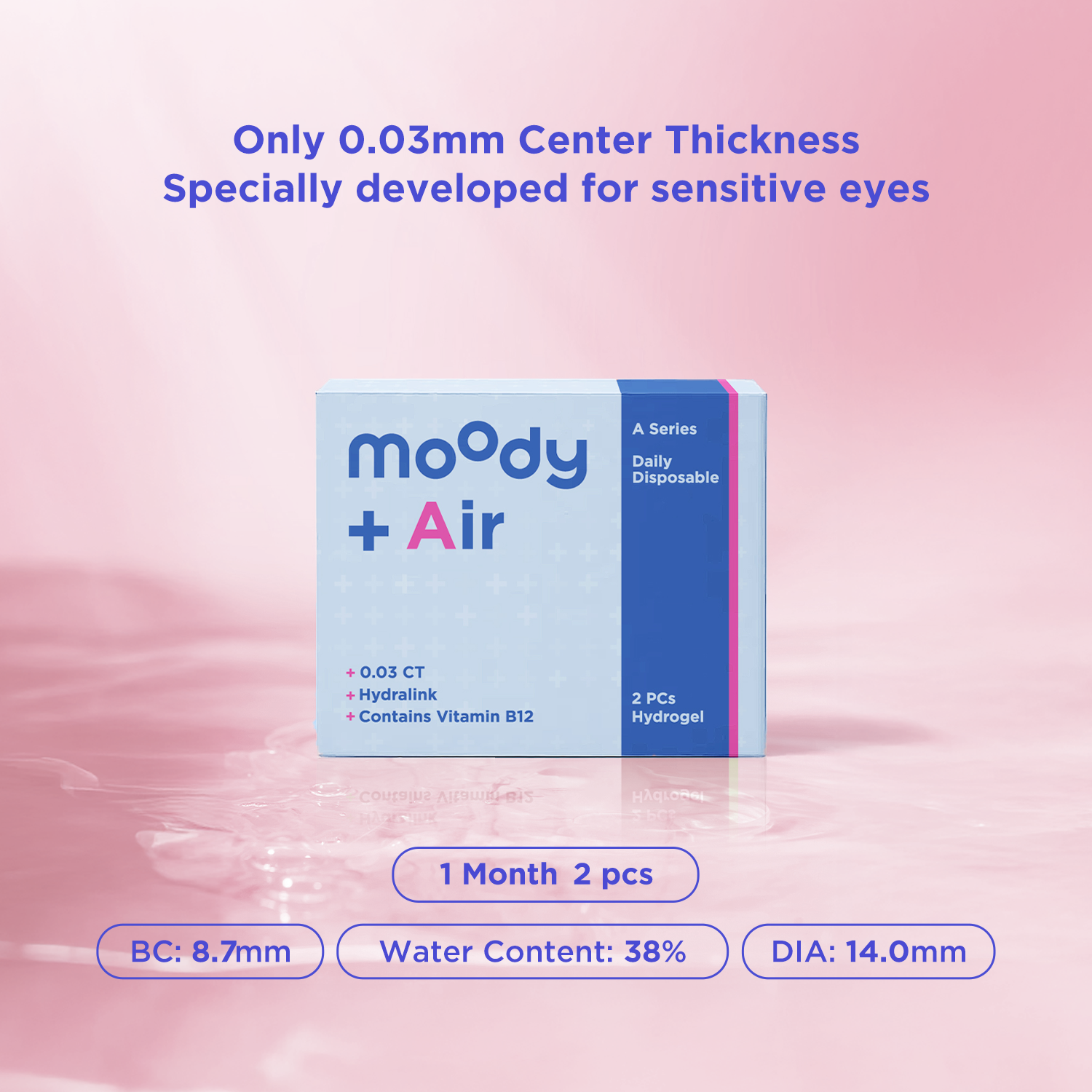
moodyPlus A 2 pcs Daily Contacts
Shipping ▼
Estimated delivery time is 10–18 business days, varying by destination country. For more details, please check our shipping policy.
Tracking information will only be updated once the parcel arrives in the destination country (up to 7 business days after you receive your order confirmation email).
We offer worldwide shipping.
Returns & Refunds ▼
14-day return / refund on unopened, unused items, counted from the delivery date.
To start a return, contact us with your order number. See our refund policy for full details.
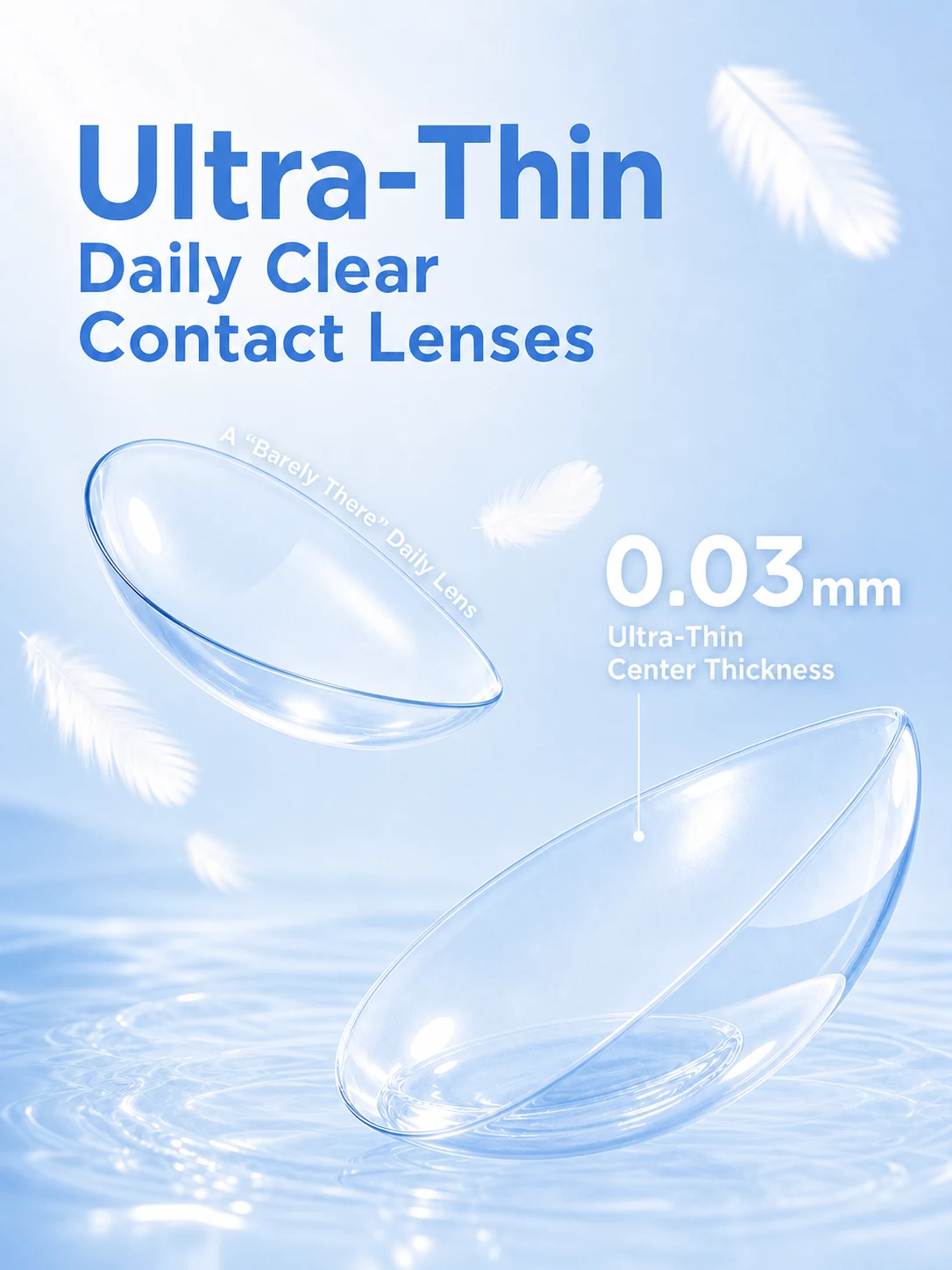
Watery, scratchy eyes? That’s friction.
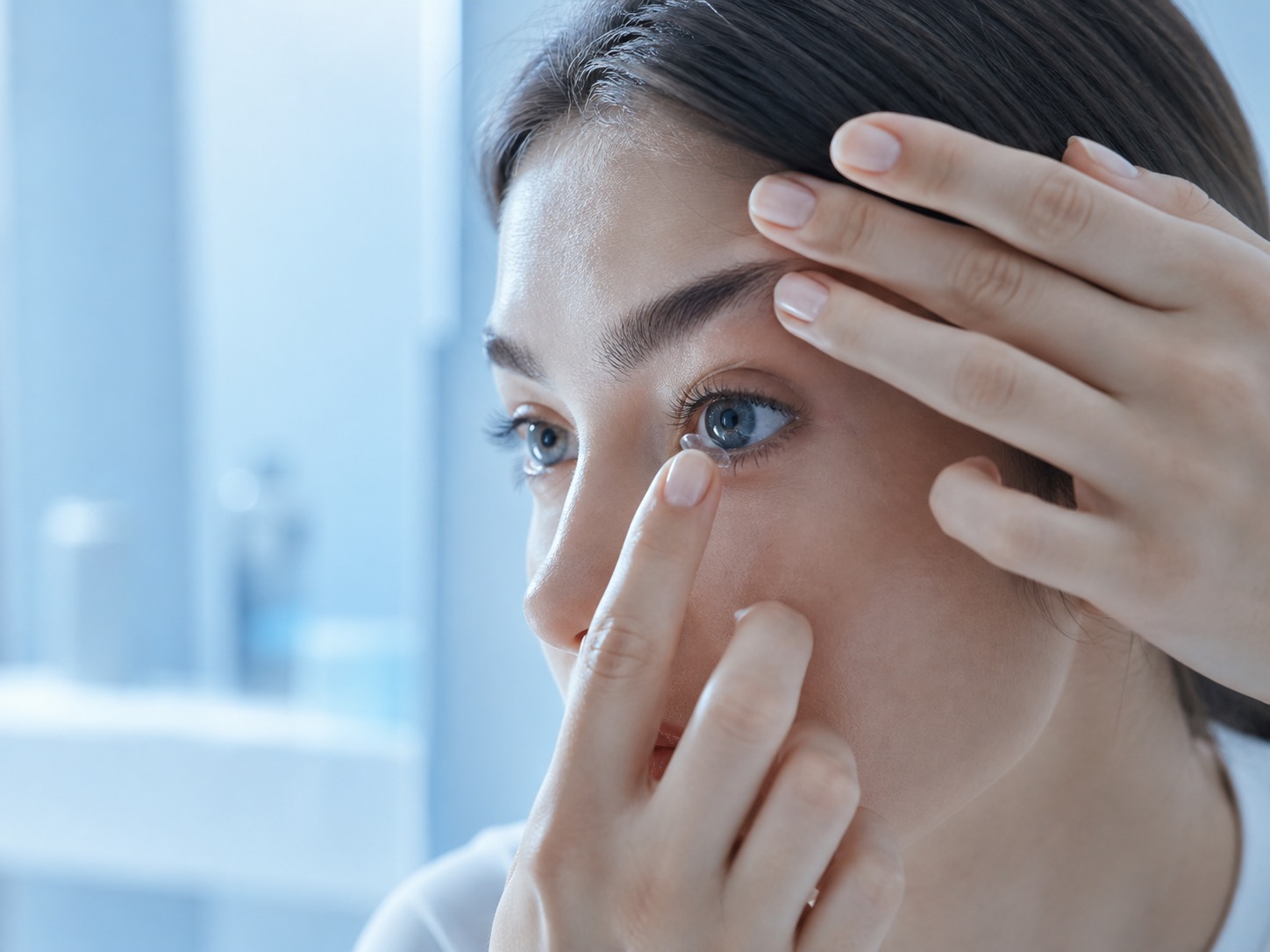
If your eyes tear up and feel scratchy the second a lens goes in, you’re reacting to physical friction. The cornea is the most nerve-dense surface on your body — 300–600× more than skin — so a lens that’s too thick or stiff sets those nerves off: reflex tears, constant blinking, that “sand in the eye” feeling.
less lens to press and rub — so there’s far less for those hyper-sensitive nerves to notice.
Thickness is one friction trigger; surface dehydration is another — handled by the Hydralink™ coating below.
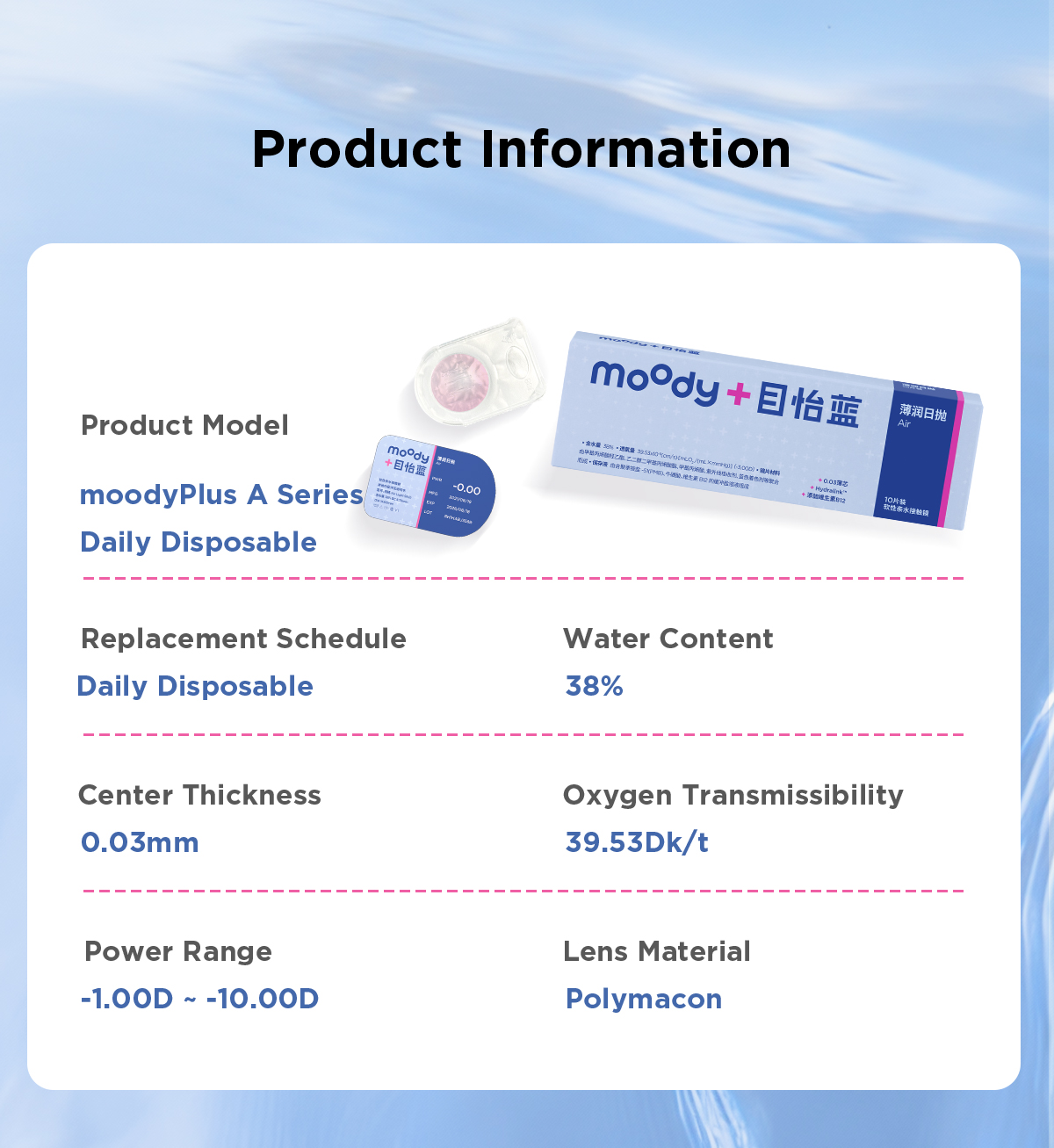
Low water isn’t less moisture — it’s more stable.
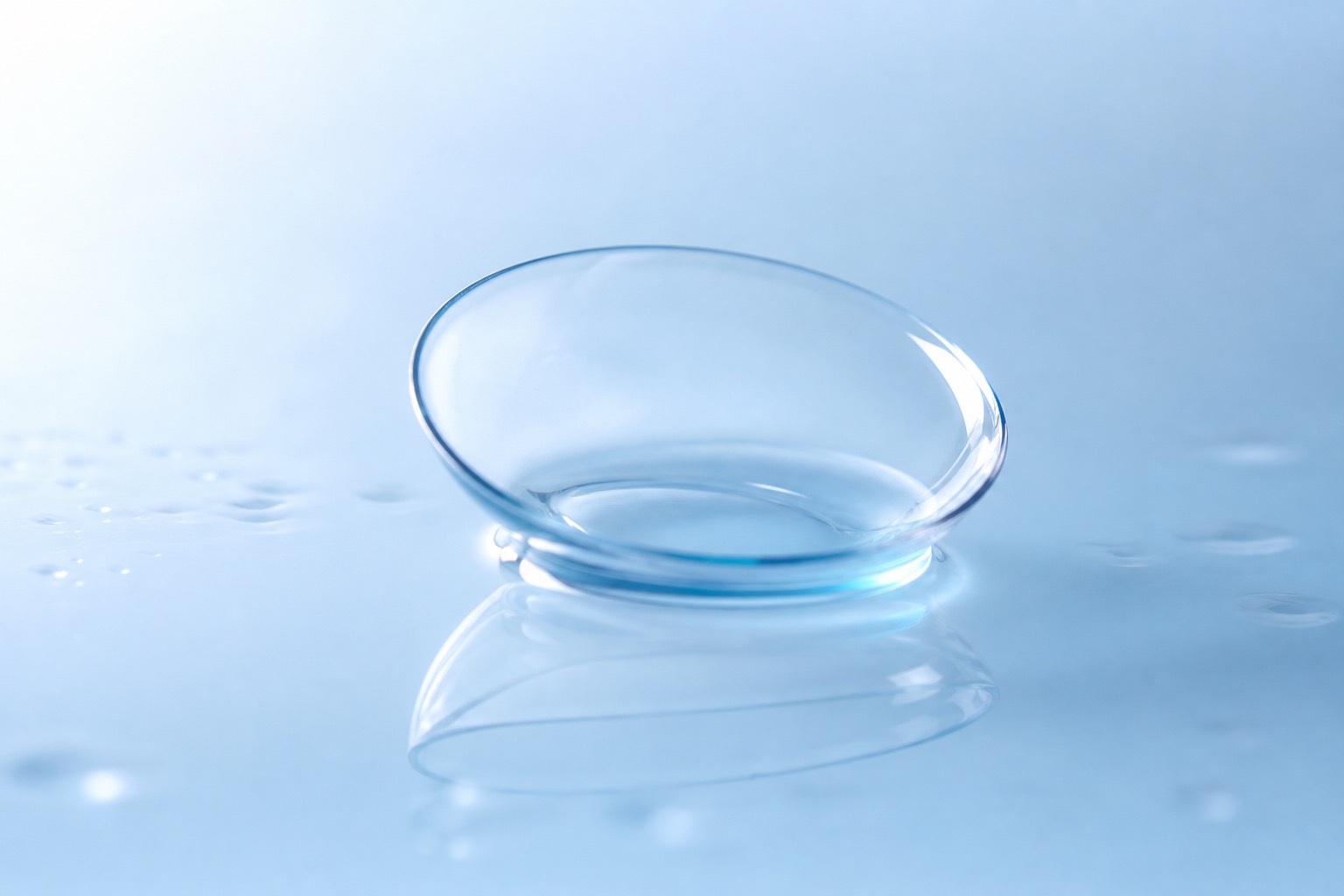
Counter-intuitive, but simple: a high-water lens needs plenty of water just to hold its shape, so as it dries it tops itself up from your eye. A low-water lens doesn’t rely on much water to keep its structure — so it absorbs far less moisture from your ocular surface.
doesn’t need much water to hold its shape — so it draws less from your eye’s own moisture.
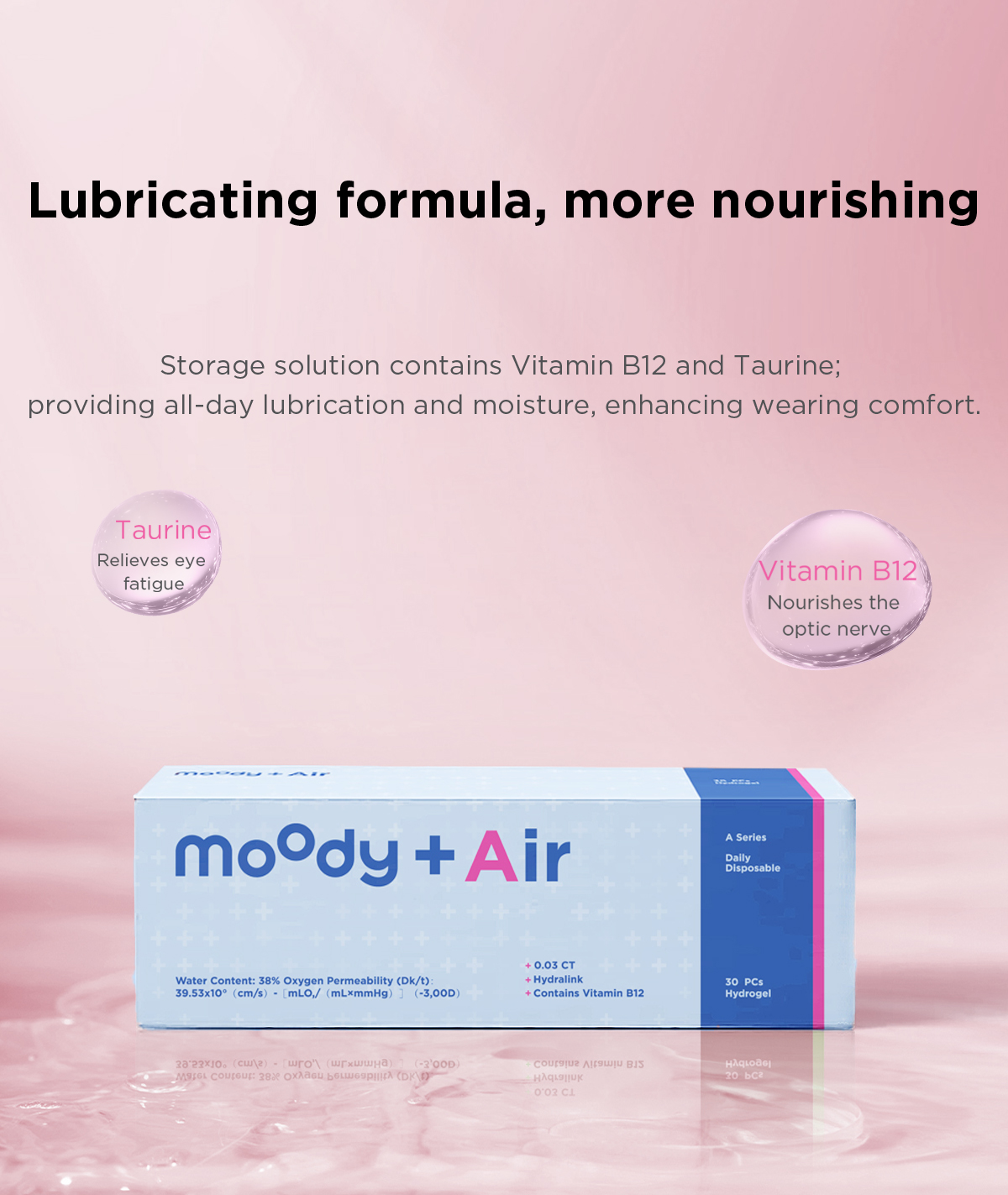
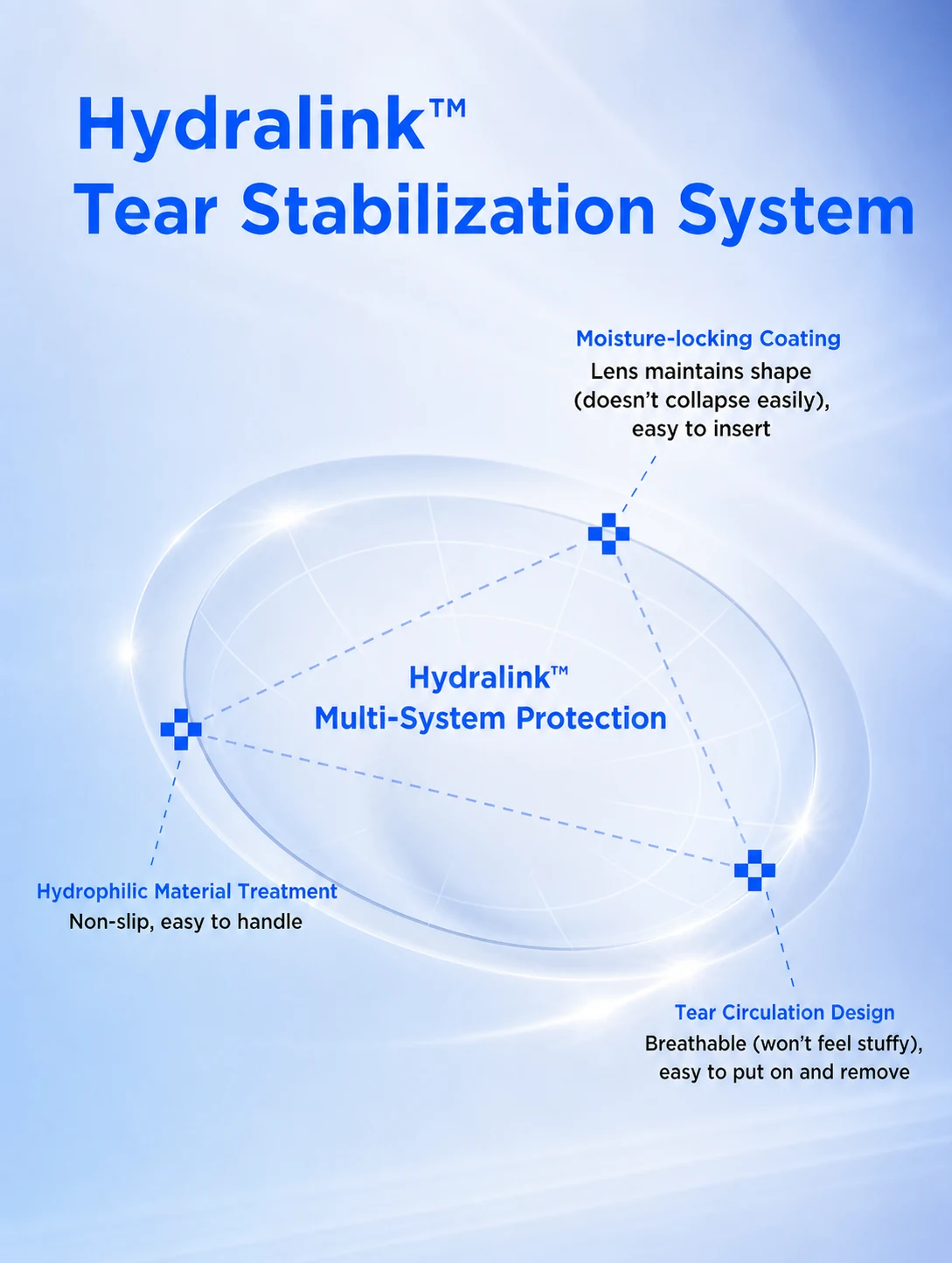
Paired with the Hydralink™ tear-stabilization system (left): moisture-locking coating, hydrophilic material treatment and a tear-circulation edge.
Same day, two timelines
Thin and low-water, A feels the same from morning to night — while high-water lenses dry out and suction by afternoon.
High-water lenses can draw moisture from the eye as their own water evaporates — often felt as tightening or “suction” by the afternoon. Individual experience varies.
Premium-thin comfort, without the high-water catch
| moody A | Premiumthin daily | Mid-rangedaily | High-waterdaily | |
|---|---|---|---|---|
| Ultra-thin 0.03mm center | ||||
| Barely-there, low foreign-body feel | ||||
| Low water — stays stable, no “suction” | ||||
| Hydralink™ moisture system | ||||
| Built for sensitive / first-time eyes | ||||
| Stable all-day comfort | ||||
| Factory-direct price | ||||
| Price per lens * | ≈ $0.75 |
≈ $1.50 | ≈ $1.05 | ≈ $0.85 |
Read it like this: premium dailies can be thin and gentle too — but they’re still high-water (so they dry and tighten), skip Hydralink™, and cost more. moody A is the only one that’s ultra-thin, low-water-stable and factory-direct priced.
* Per lens; market averages, approximate. Tiers are market categories, not specific brands; based on current available data for mass-market daily lenses. Individual experience varies.
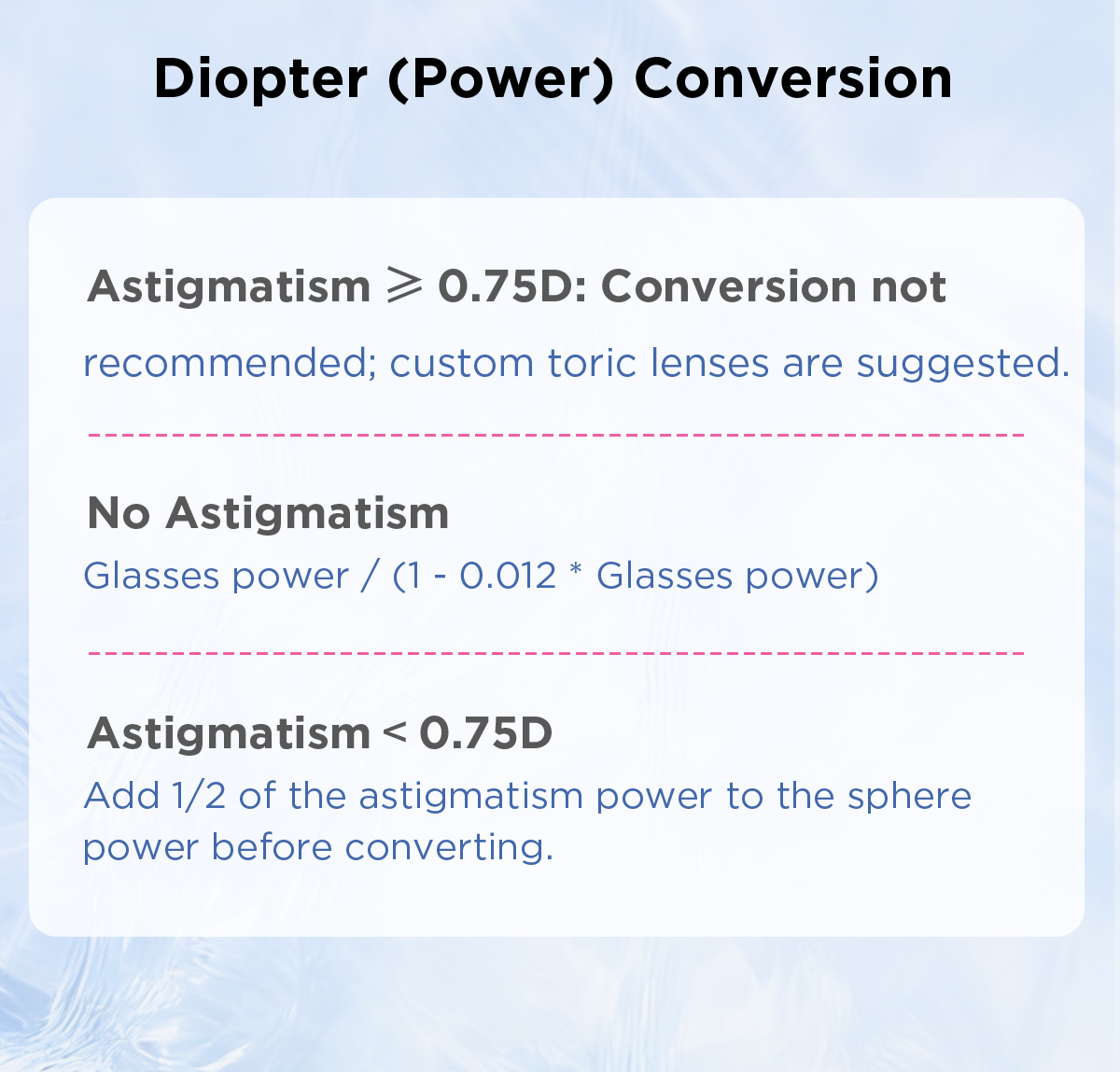
Diopter (Power) Conversion
Contact-lens power isn’t the same as your glasses prescription. Here’s how to convert it before you order.
No astigmatism
Lens power = Glasses power / (1 − 0.012 × Glasses power)Astigmatism < 0.75D
Add 1/2 of the astigmatism power to the sphere power first, then convert with the formula above.
Astigmatism ≥ 0.75D
Conversion isn’t recommended — custom toric lenses are suggested for clear, stable vision.
Guidance only. Round to the nearest available power, and when in doubt confirm with your eye-care professional or your latest prescription.