Find the clear lens that finally fits.
Two ways in: get the basics straight so you choose like an expert — or start from what bugs your eyes and we'll point you to the fix.
What you should know before you buy.
Neutral, no sales pitch. Five minutes here and you'll read a lens spec sheet better than most people who've worn them for years.
Silicone hydrogel, explained
The oxygen upgrade over ordinary hydrogel — what it is and who actually benefits.
Read guide →Oxygen & Dk/t
Why your cornea needs to breathe, and how to read the one number that decides it.
Read guide →Water content: high vs low
The counter-intuitive truth — why higher water can leave your eyes drier.
Read guide →Reading your prescription
Diopter, base curve and diameter — confirm the right power before checkout.
Read guide →Start from what bugs your eyes.
Pick the one that sounds like you. We'll explain what's actually going on — and which lens is built to fix it.
Most clear lenses are one-size-for-everyone. If your eyes aren't average, nothing feels right — it's not you, you were never matched.
See why → Red · sore · tiredLower-Dk/t lenses transmit less oxygen to the cornea over a long day — a higher-Dk/t lens lets more oxygen through. (Dk/t figures per manufacturer lab data.)
See the fix → Grit · scratch · foreign-bodyEdge fit and thickness. A thick or poorly-seated edge catches your lid — a thinner profile disappears.
See the fix →Four steps from "which lens" to checkout.
Spot your issue
Start from a symptom in "Why does my…?" or read the basics first.
Choose your series
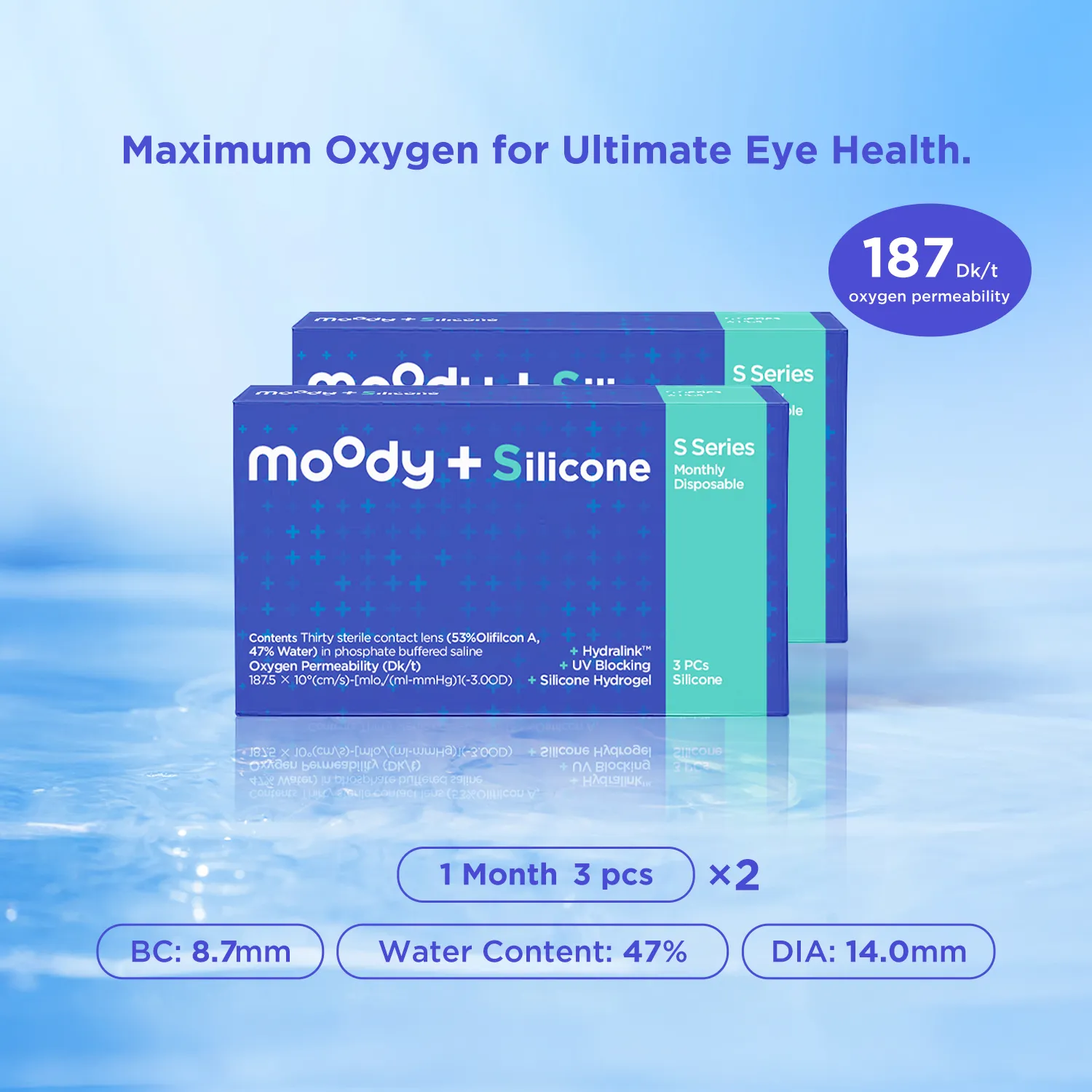
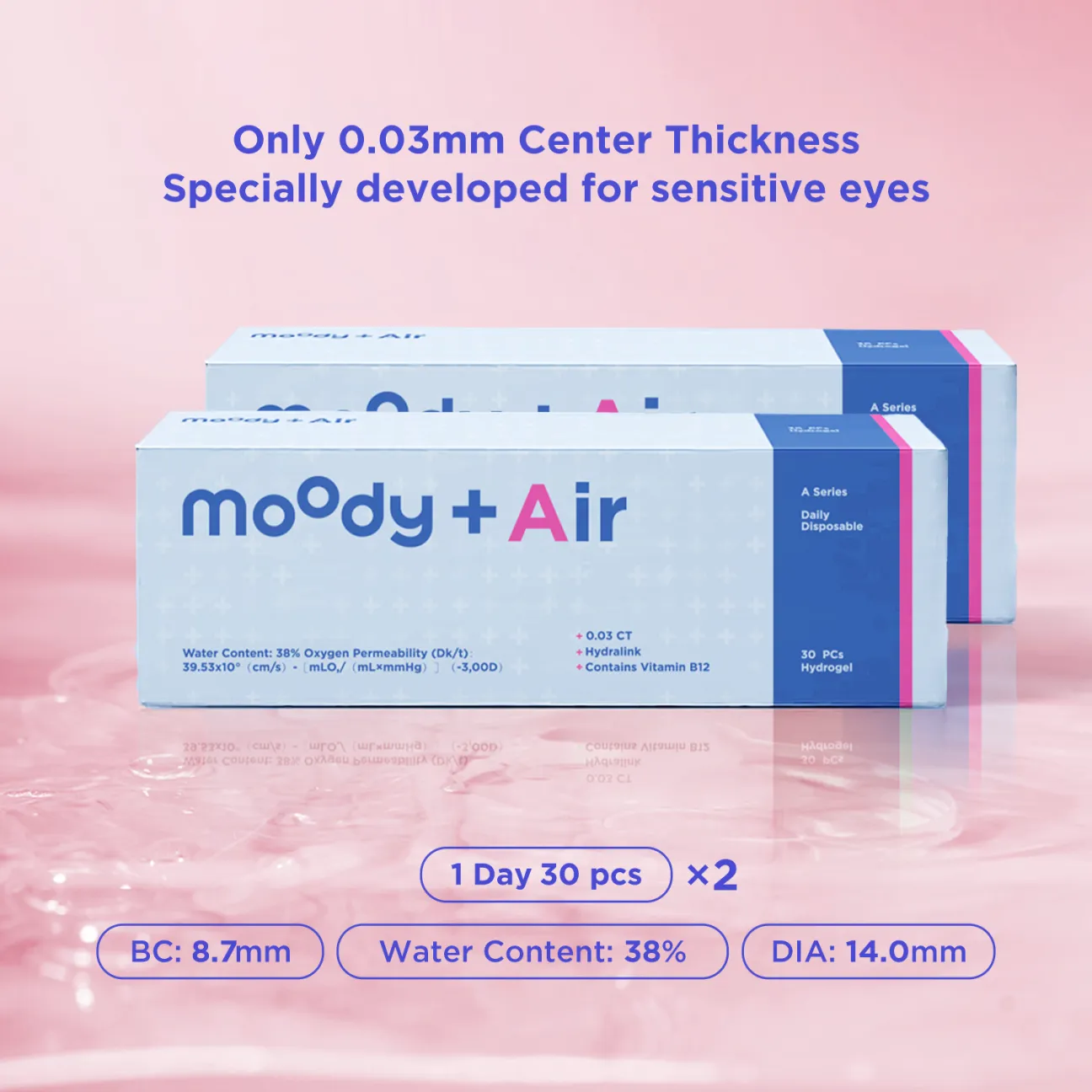
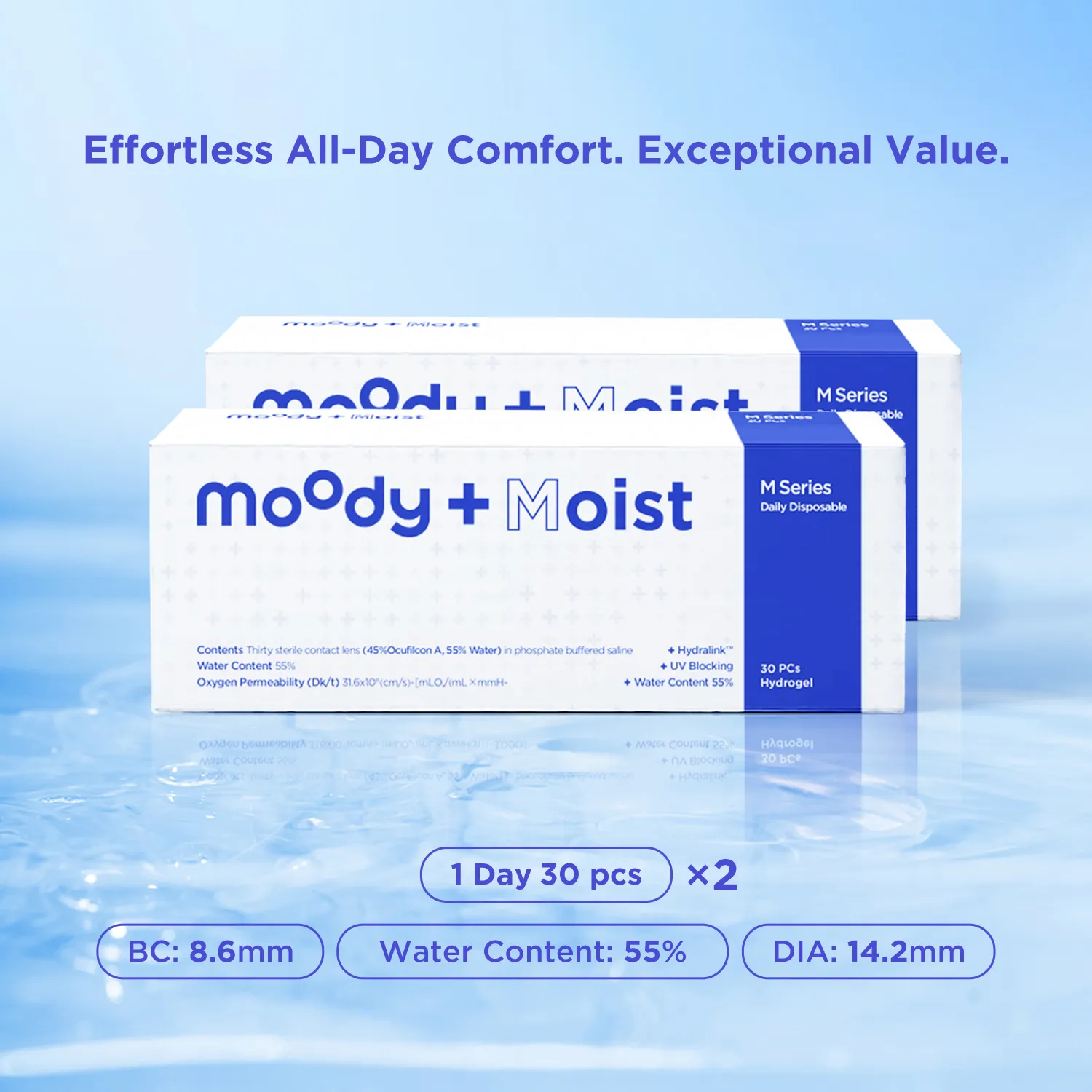
Oxygen → S · sensitive/thin → A · everyday moisture & value → M.
Select your power
Confirm the exact Diopter for each eye on the product page.
Get help after
Use order tracking and support if you need help post-purchase.
Before you rely on these guides.
Can these guides replace professional fitting advice?+
No. Use the prescription and lens parameters from your eye-care professional, and ask them if you're unsure about fit. These guides help you narrow the series and confirm details — they don't replace an exam.
How do I choose between the three series?+
Start with how your eyes feel: long screen hours and oxygen → S-Series; sensitive or easily-tired eyes → A-Series; everyday comfort and value → M-Series.