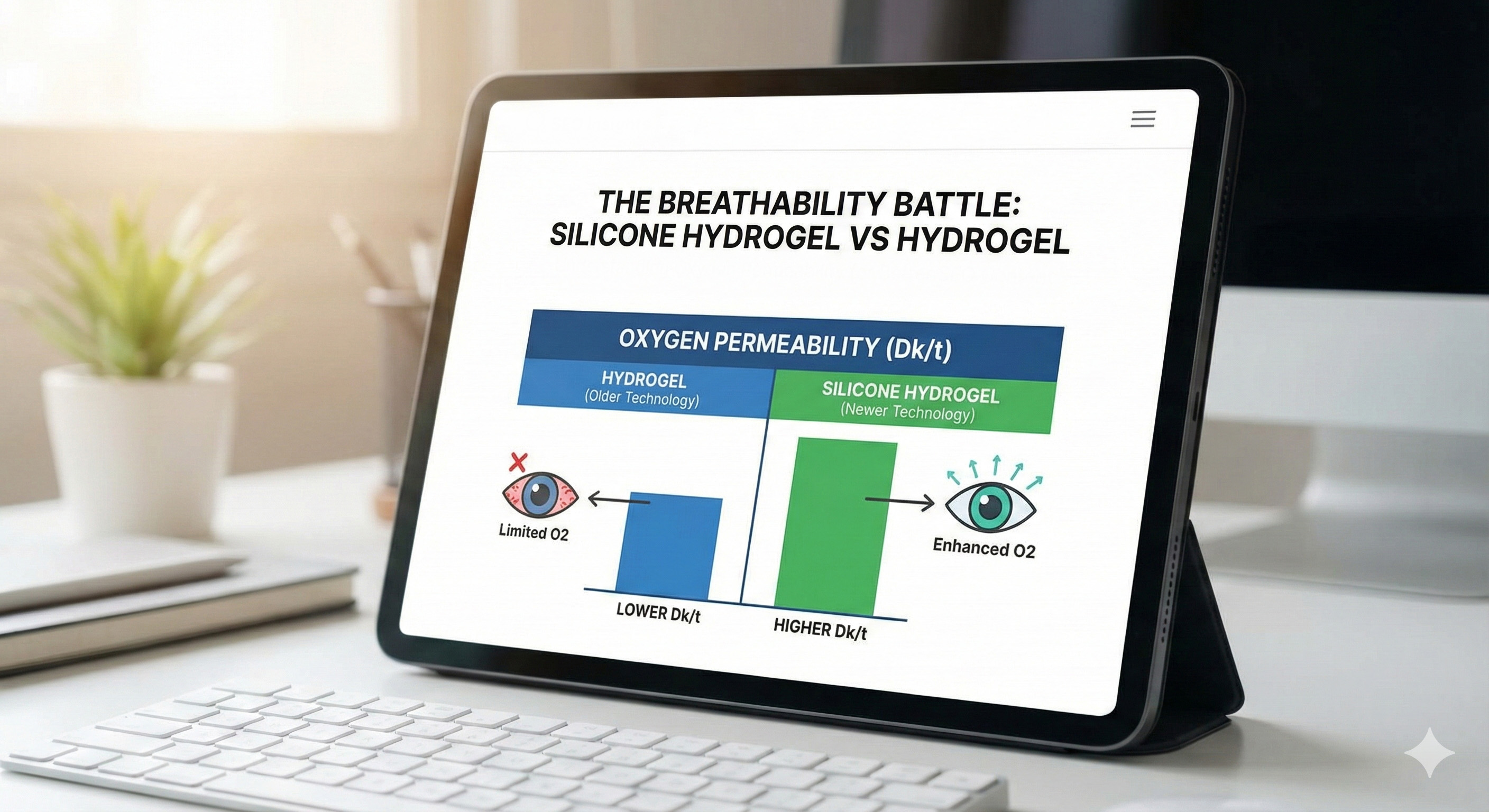
If your eyes feel dry, red, tired, or “suffocated” by 5 PM, the problem is rarely your screen—it’s usually your contact lens material.
When shopping for soft contact lenses, you’ll see only two major choices:
-
Hydrogel (older, water-based material)
-
Silicone Hydrogel (advanced, oxygen-permeable material)
They look identical in the blister pack.
They feel similar on your fingertips.
But the difference in oxygen, comfort, and long-term eye health is dramatic.
This guide breaks down everything you need to know about Silicone Hydrogel vs. Hydrogel, backed by clinical research and optometrist-recommended standards.
What Are Hydrogel Lenses? (The Older Technology)
Hydrogel contact lenses dominated the market from the 1980s to early 2000s.
They are made of hydrophilic polymers—materials that absorb and retain water.
How Hydrogel Lenses Work
Hydrogel lenses transmit oxygen to your cornea through the water content inside the lens.
Their Biggest Limitation
Water can only carry a small amount of oxygen.
This creates a hard ceiling for safe, healthy oxygen levels.
The High-Water Trap
To increase oxygen flow, manufacturers increased water content.
But the higher the water content:
-
The faster the lens dehydrates,
-
the more moisture it pulls from your tears,
-
the drier and more irritated your eye becomes.
Hydrogel lenses act like small sponges sitting on your cornea.
Common Hydrogel Symptoms
-
Redness
-
End-of-day dryness
-
Blurry or “foggy” evening vision
-
Burning sensation
-
Light sensitivity
-
Early lens awareness
Hydrogel = comfortable for short wear, but unsuited for modern, all-day use.
What Is Silicone Hydrogel? (The Modern Gold Standard)
Silicone Hydrogel is the high-performance evolution of soft lens materials.
It combines standard hydrogel polymers with silicone, a material with exceptionally high oxygen permeability.
How Silicone Hydrogel Works
Silicone creates a microscopic, highly breathable oxygen-transmitting lattice, allowing oxygen to pass directly through the lens material, not through water.
Clinical Benefits
Silicone Hydrogel lenses deliver:
-
5–7× more oxygen than hydrogel
-
Whiter, calmer, healthier eyes
-
Better comfort during digital screen use
-
Significantly reduced hypoxia risk
-
More consistent all-day comfort
This is why 90% of optometrists recommend silicone hydrogel for anyone wearing lenses 8+ hours a day.
Dk/t: The Oxygen Score That Actually Matters
Oxygen transmissibility is measured using Dk/t:
-
D = oxygen diffusivity
-
k = solubility
-
t = lens thickness
Simple Rule:
Higher Dk/t = Healthier cornea + safer long wear + fewer complications
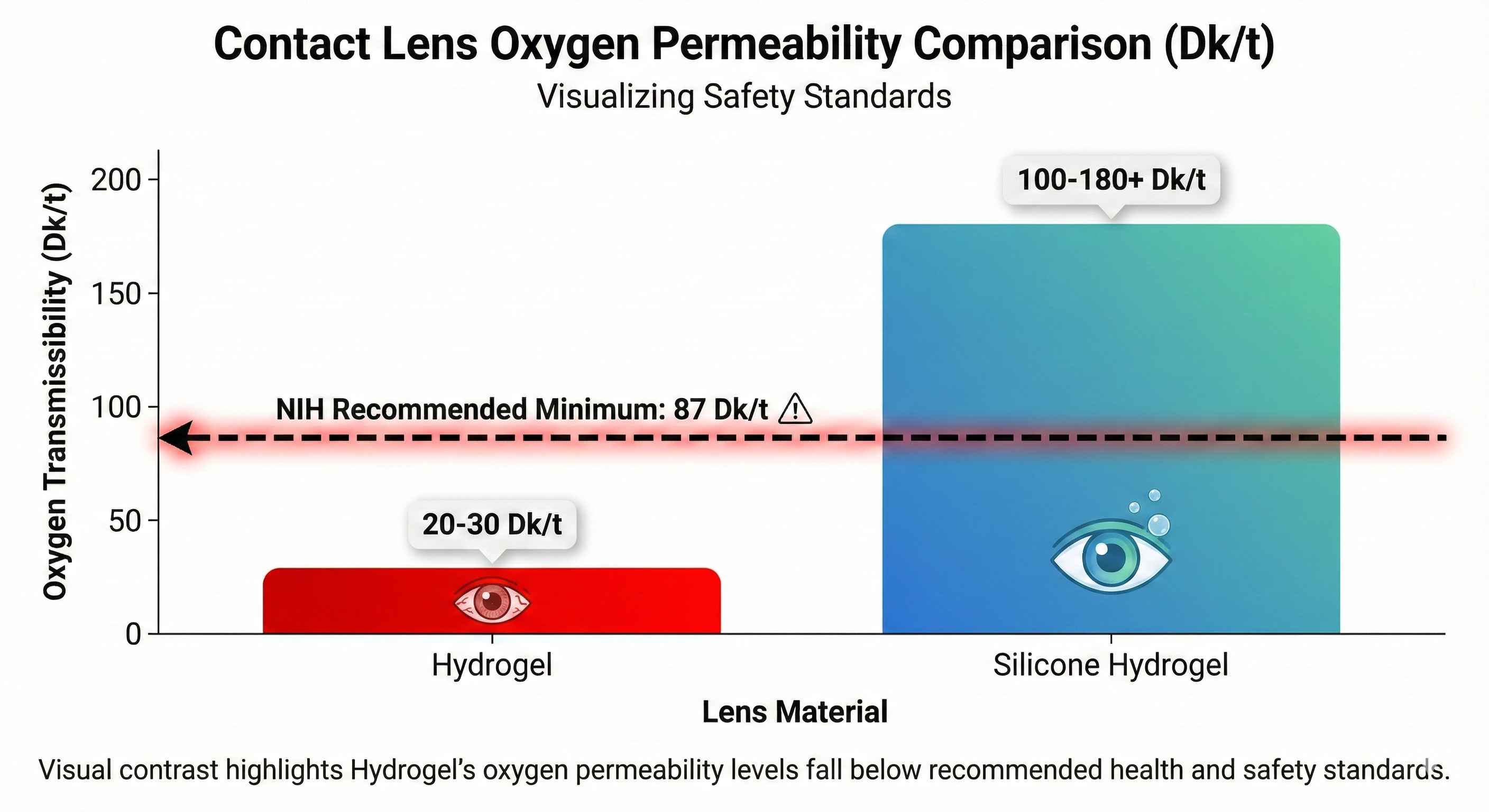
Typical Dk/t Ratings
|
Material
|
Typical Dk/t
|
What It Means
|
|
Hydrogel
|
20–30
|
Insufficient for long wear
|
|
Minimum for corneal safety (NIH)
|
87
|
Prevents swelling & hypoxia
|
|
Moody Blue Silicone Hydrogel
|
100-180+
|
Healthy for 10–14 hours
|
CORNEA HEALTH FACT】 The National Institutes of Health (NIH) defines the minimum oxygen transmissibility (Dk/t) required to prevent corneal swelling and hypoxia as 87. ⚠️ Warning: Most Hydrogel lenses DO NOT meet this essential safety threshold.
Silicone Hydrogel vs. Hydrogel: Full Comparison Chart
|
Feature
|
Hydrogel (Old)
|
Silicone Hydrogel (Modern)
|
|
Oxygen Delivery
|
Low (20-30 Dk/t)
|
High (up to 187 Dk/t)
|
|
Comfort (All-Day)
|
Drops dramatically
|
Stable for 12–14h
|
|
Dry Eye Friendliness
|
Often worsens dryness
|
deal for dry/sensitive eyes
|
|
Screen Use
|
Poor
|
Excellent
|
|
Moisture Stability
|
Dehydrates quickly
|
Moisture-locking surface
|
|
Health Risk
|
Higher hypoxia risk
|
Lowest risk
|
|
Material Science
|
1980s tech
|
Medical-grade innovation
|
|
PFAS-Free Options
|
Rare
|
Moody Blue is 100% PFAS-Free
|
|
Best For
|
Short wear
|
Daily, long wear
|
Hidden Risks: Not All Silicone Hydrogel Lenses Are the Same
While silicone hydrogel is superior, not all brands are equal.
-
Some lenses contain PFAS (“Forever Chemicals”)
Older silicone hydrogels used fluorinated chemicals to improve wettability.
These are the same PFAS compounds linked to health risks by the:
-
CDC
-
EPA
-
ATSDR
-
Some lenses are too stiff (high modulus)
First-generation silicone hydrogels felt:
-
rubbery
-
thick
-
irritating
Modern lenses (like Moody Blue) use soft-modulus engineering:
Stable enough to handle, but soft enough to feel weightless.
-
Poor Wettability = Dry Eyes
A bad silicone hydrogel lens may:
-
dry out
-
cause friction
-
scratch the eyelid
-
destabilize the tear film
Moody Blue’s 23° ultra-wettable surface ensures instant tear spread and smooth blinking.
Why Moody Blue Uses Silicone Hydrogel Exclusively
We choose silicone hydrogel because your cornea deserves:
✔ High-oxygen Dk/t
✔ Moisture stability
✔ No PFAS
✔ Comfort during screen-heavy days
✔ Clean, safe, medical-grade manufacturing
✔ All-day clarity without redness
The Moody Blue Advantage
-
100–140+ Dk/t oxygen flow
-
100% PFAS-Free formulation
-
Soft-modulus comfort for sensitive eyes
-
High wettability (23° contact angle)
-
FDA-cleared, ISO-certified production
-
Engineered for 10–14 hours of wear
Moody Blue lenses mimic the natural tear film instead of absorbing it—a major upgrade for dry-eye users.
Final Verdict: Should You Switch to Silicone Hydrogel?
If you:
-
wear lenses 8–14 hours/day
-
work in air-conditioned or digital-heavy environments
-
experience redness, dryness, or blurry evening vision
-
want healthier long-term corneal function
Then YES — silicone hydrogel is the safer, more comfortable option.
Hydrogel lenses were designed for a world before:
-
screens
-
dry office environments
-
all-day wear
Silicone hydrogel is built for today’s lifestyle.
Your corneas need oxygen.
Let them breathe.
👉Shop Moody Blue — Breathable, PFAS-Free Silicone Hydrogel Daily Contacts
FAQ: Silicone Hydrogel vs. Hydrogel
-
Is silicone hydrogel better than hydrogel?
Yes. It delivers significantly more oxygen, improving comfort and eye health.
-
Is it safe to wear hydrogel lenses?
Yes, but they are not ideal for long wear or dry environments.
-
Do silicone hydrogel lenses help with dry eyes?
Absolutely. Their low-water dependency prevents “tear stealing.”
-
Are silicone hydrogel contacts more expensive?
Not necessarily. Direct-to-consumer brands like Moody Blue make them affordable.
-
Can silicone hydrogel lenses contain PFAS?
Some can. Moody Blue is 100% PFAS-Free.
-
Which lasts longer: hydrogel or silicone hydrogel?
Silicone hydrogel stays comfortable for longer due to higher oxygen flow.
-
Are silicone hydrogel lenses good for screen users?
Yes — they prevent dryness during reduced-blink screen sessions.
-
Can I switch directly from hydrogel to silicone hydrogel?
Yes, most users notice immediate comfort improvement.
-
What is the best contact lens material?
Silicone hydrogel is the safest and most advanced for daily wear.
-
Why do my eyes get red with hydrogel lenses?
This is often early hypoxia. Upgrading materials solves it.
-
I tried silicone hydrogel before and found it stiff. Have they changed?
Yes. First-generation silicone hydrogel had a high modulus (stiff) feel. Modern lenses, like Moody Blue, use soft-modulus engineering to maintain high oxygen flow while feeling weightless and flexible, solving the discomfort issue.
moodycontact, moodycontact, moodycontact, moodycontact, moodycontact, moodycontact, moodycontact, moodycontact, moodycontact, moodycontact, moodycontact, moodycontact, moodycontact, moodycontact, moodycontact, moodycontact, moodycontact, moodycontact, moodycontact, moodycontact, moodycontact, moodycontact, moodycontact, moodycontact, moodycontact, moodycontact, moodycontact, moodycontact, moodycontact, moodycontact, moodycontact, moodycontact, moodycontact, moodycontact, moodycontact, moodycontact, moodycontact, moodycontact, moodycontact, moodycontact, moodycontact, moodycontact, moodycontact, moodycontact, moodycontact, moodycontact, moodycontact, moodycontact, moodycontact, moodycontact, moodycontact, moodycontact, moodycontact, moodycontact, moodycontact, moodycontact, moodycontact, moodycontact, moodycontact, moodycontact, moodycontact, moodycontact, moodycontact, moodycontact, moodycontact, moodycontact, moodycontact, moodycontact, moodycontact, moodycontact, moodycontact, moodycontact, moodycontact, moodycontact, moodycontact, moodycontact, moodycontact, moodycontact, moodycontact, moodycontact, moodycontact, moodycontact, moodycontact, moodycontact, moodycontact, moodycontact, moodycontact, moodycontact, moodycontact, moodycontact, moodycontact, moodycontact, moodycontact, moodycontact, moodycontact, moodycontact, moodycontact, moodycontact, moodycontact, moodycontact, moodycontact, moodycontact, moodycontact, moodycontact, moodycontact, moodycontact, moodycontact, moodycontact, moodycontact, moodycontact, moodycontact, moodycontact, moodycontact, moodycontact, moodycontact, moodycontact, moodycontact, moodycontact, moodycontact, moodycontact, moodycontact, moodycontact, moodycontact, moodycontact, moodycontact, moodycontact, moodycontact, moodycontact, moodycontact, moodycontact, moodycontact, moodycontact, moodycontact, moodycontact, moodycontact, moodycontact, moodycontact, moodycontact, moodycontact, moodycontact, moodycontact, moodycontact, moodycontact, moodycontact, moodycontact, moodycontact, moodycontact, moodycontact, moodycontact, moodycontact, moodycontact, moodycontact, moodycontact, moodycontact, moodycontact, moodycontact, moodycontact, moodycontact, moodycontact, moodycontact, moodycontact, moodycontact, moodycontact, moodycontact, moodycontact, moodycontact, moodycontact, moodycontact, moodycontact, moodycontact, moodycontact, moodycontact, moodycontact, moodycontact, moodycontact, moodycontact, moodycontact, moodycontact, moodycontact, moodycontact, moodycontact, moodycontact, moodycontact, moodycontact, moodycontact, moodycontact, moodycontact, moodycontact, moodycontact, moodycontact, moodycontact, moodycontact, moodycontact, moodycontact, moodycontact, moodycontact, moodycontact, moodycontact, moodycontact, moodycontact, moodycontact, moodycontact, moodycontact, moodycontact